

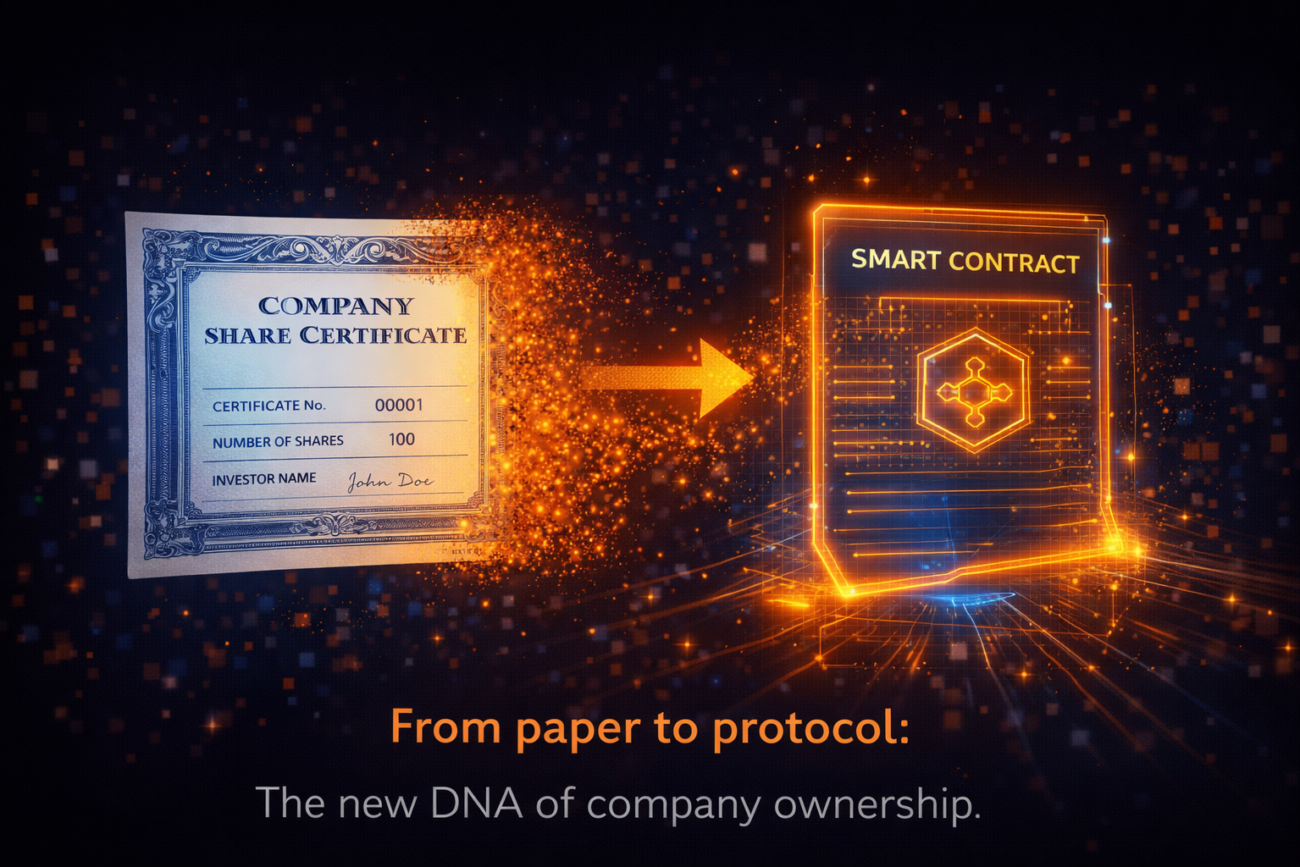
In our discussion on the Liquidity Revolution, we established that agility is the ultimate currency. However, most founders still carry a heavy, invisible burden: Static Equity. For over a century, owning a piece of a company meant holding a piece of paper or a line in a stagnant spreadsheet. It was an asset that sat in a vault, waiting years for an “exit” to become useful.
That era is over. We are entering the age of Programmable Equity. This is the shift from passive ownership to active, intelligent participation. By turning company shares into digital protocols, we are not just changing how we trade; we are changing how value itself behaves.
Beyond the Cap Table: Equity as an Operating System
Traditional equity is “dumb.” It doesn’t know who owns it, it doesn’t know the tax laws of the holder’s jurisdiction, and it certainly doesn’t know how to pay a dividend on its own. It requires a small army of lawyers, accountants, and transfer agents to move or manage.
Programmable equity, however, acts as its own operating system. It carries its rules within its code. Whether you are managing tokenized real estate or a complex supply chain network, your equity can now be programmed to respond to real-world events. It is ownership that thinks.
The Mechanics of Intelligent Equity
The transition to programmable ownership is built on three core functionalities that redefine the relationship between a founder and their capital.
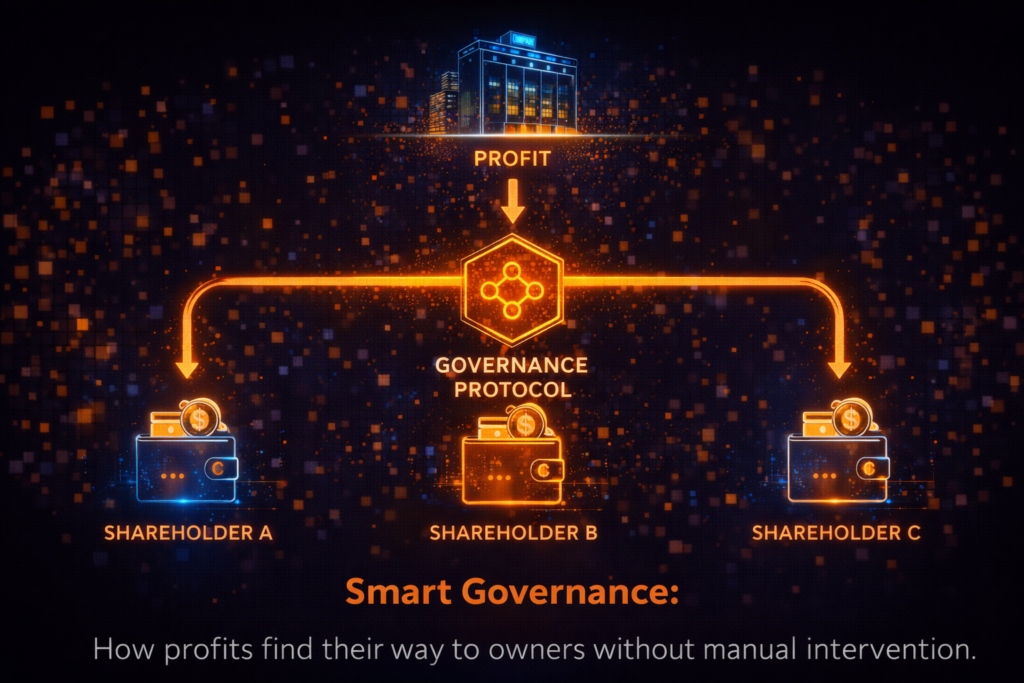
1. Real-Time Dividend Distribution
In a traditional business, paying out profits is a quarterly or annual headache. With programmable equity, dividends can be “streamed.” As your revenue integrity systems identify incoming profits, a portion can be automatically routed to shareholders’ digital treasuries. This creates a “live” yield that makes your company significantly more attractive to private credit investors.
2. Embedded Compliance and Governance
One of the biggest hurdles to scaling a global business is staying compliant with varying international laws. Programmable shares can include “Geo-Fencing” and “KYC-Verification” directly in the token. If a shareholder tries to sell to an unverified entity, the transaction simply won’t execute. This “Self-Regulating” nature reduces your legal overhead and protects your M&A valuation by ensuring your cap table is always clean and audit-ready.
The Synergy of the Akcache Ecosystem
Programmable equity does not exist in a vacuum. It is the connective tissue that binds the various layers of your business together into a single, high-performance machine.
Equity as Liquidity
When your shares are programmable, they can be used as collateral. Instead of taking out a high-interest business loan, you can “lock” a small percentage of your equity in a smart contract to instantly access capital. This allows you to fund customer acquisition or hardware upgrades without diluting your ownership or begging a bank for permission.
The Tax Efficiency of Programmable Shares
By integrating algorithmic tax strategies, your equity can optimize itself for the holder. Shares can be programmed to trigger “Tax-Loss Harvesting” movements or adjust their holding structure to benefit from long-term capital gains status automatically. You are no longer just building a business; you are building a tax-optimized wealth vehicle.
Privacy in a Transparent World
A common concern with digital equity is the exposure of the “Cap Table.” Who owns how much? Through Zero-Knowledge Proofs (ZKP), as detailed in our embedded finance guide, you can maintain total privacy. You can prove to a potential buyer that your “Top 10 Shareholders own 80% of the company” and that they are all “accredited investors” without revealing a single name or personal detail.
This creates a “Private-Public” hybrid: the efficiency of a public market with the confidentiality of a private firm.
The Inspirational Leap: From Founder to Architect
The true power of programmable equity is the freedom it grants the founder. When your ownership is liquid and automated, you are no longer “trapped” by your success. You can diversify your wealth without losing control. You can reward your supply chain partners with micro-equity that vests based on their performance. You can turn your customers into stakeholders.
You move from being a manager of a static entity to being the Architect of a Value Network. You are building a business that can breathe, grow, and adapt to the global market on its own.
Conclusion: The Final Blueprint for Sovereignty
We have traveled from the depths of debt refinancing to the heights of autonomous treasuries. The common thread is Control. Programmable equity is the final piece of the puzzle. It ensures that the value you create—the hard work, the innovation, and the risk—is preserved in its most liquid, efficient, and powerful form. Ownership is no longer a destination; it is a dynamic tool for future creation.
Welcome to the era of the intelligent business. Welcome to Akcache.
