


In our deep dive into Autonomous Treasury Management, we explored how to optimize the cash you already have. But what happens when your business needs more capital to scale—perhaps for a strategic acquisition or a massive supply chain expansion?
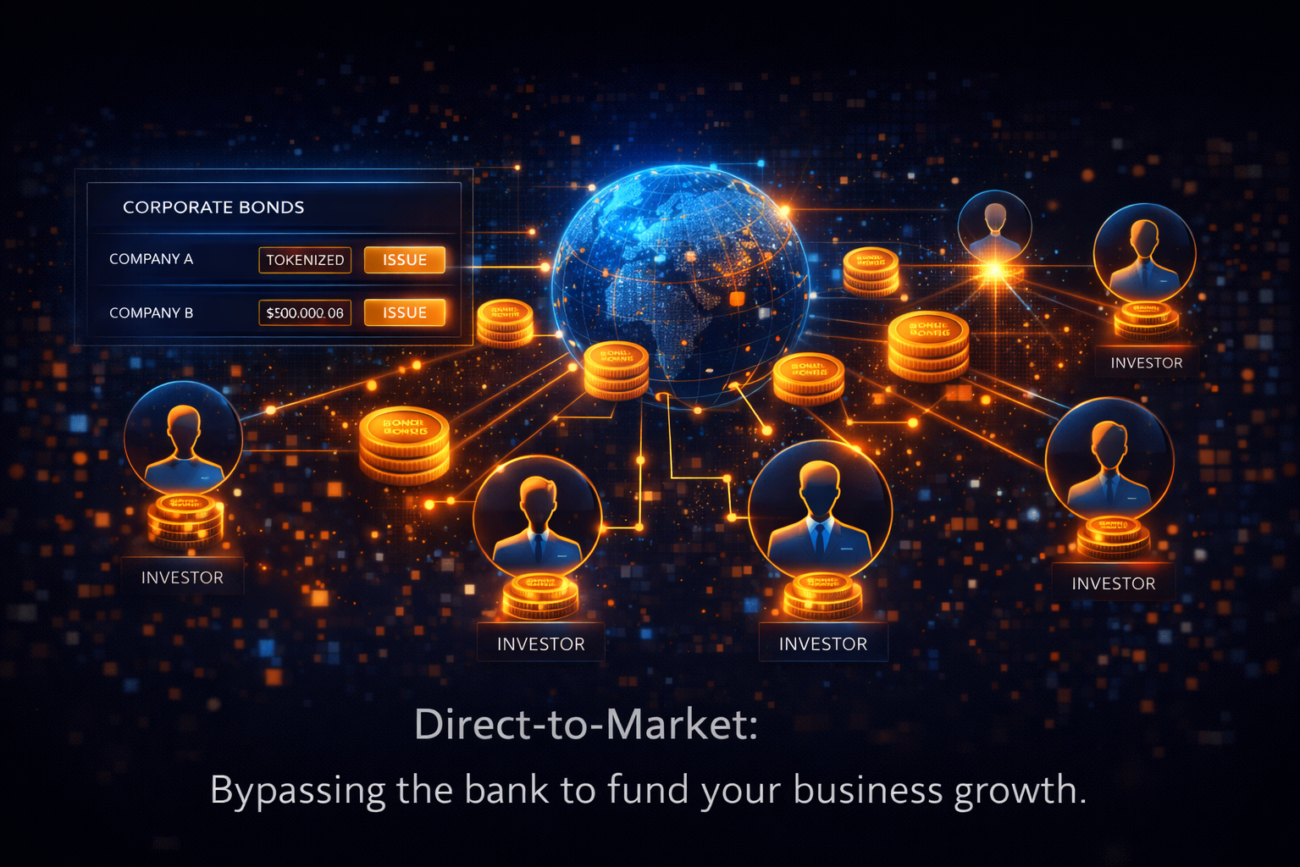
In 2026, the answer is no longer a slow, high-interest bank loan. Instead, forward-thinking firms are turning to Tokenized Corporate Debt. By converting a company’s promise to pay into digital tokens, businesses can tap into the $2 trillion private credit market directly, securing funding in days rather than months.
The Problem with Traditional Commercial Lending
Traditional bank lending is built on 20th-century friction. Banks require extensive audits, physical signatures, and “Relationship Managers” who often don’t understand the speed of a digital-first business. Furthermore, banks often charge a “Liquidity Premium”—essentially a fee because they are the only gatekeepers to capital.
Tokenization breaks this monopoly. It allows a business to fractionalize its debt and sell it to a thousand different investors simultaneously. This competitive environment naturally drives down interest rates and allows for much more flexible repayment terms that fit your specific revenue recovery cycle.
The Mechanics of Tokenized Debt Issuance
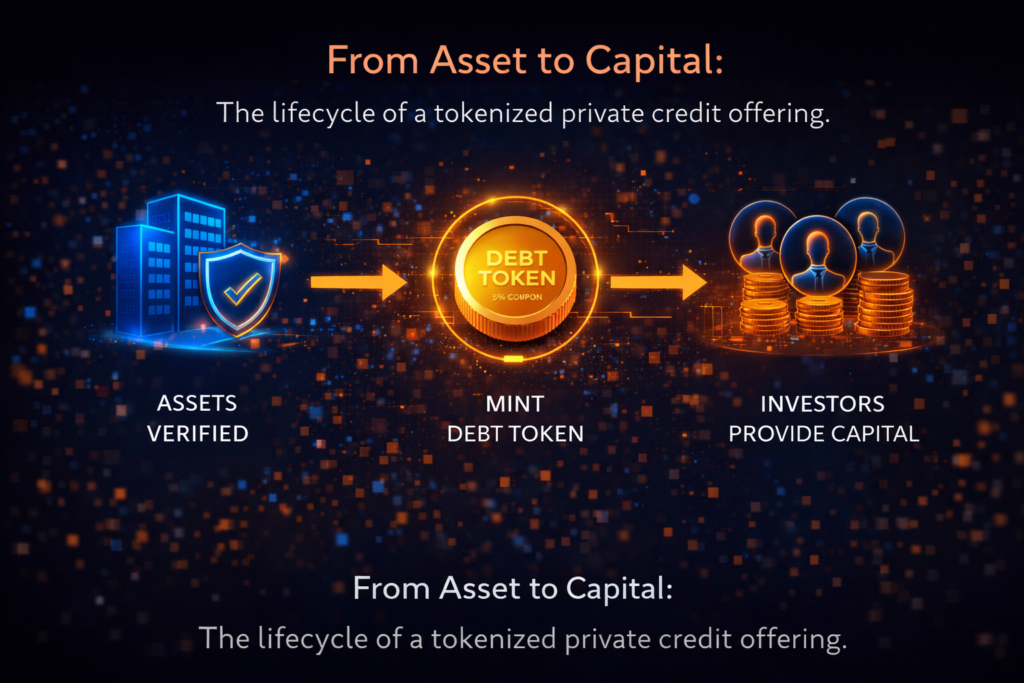
Raising capital via tokenized private credit involves moving the entire loan lifecycle onto a transparent, automated ledger. This process ensures that both the borrower and the lender are protected by code, not just promises.
1. Automated Credit Rating
Instead of waiting for a credit bureau to update a static score, tokenized debt platforms use “Live Credit.” They plug directly into your autonomous treasury to verify your cash flow, your DePIN infrastructure revenue, and your existing real estate equity. This real-time data allows you to secure a “Prime” interest rate because the lender has total visibility into your ability to pay.
2. Smart Contract Covenants
Traditional loans have “Covenants”—rules you must follow to keep the loan. In 2026, these are Smart Covenants. For example, a contract might state: “If the company’s cash reserves drop below $100,000, 5% of all incoming revenue will be automatically redirected to a debt-service vault.” Because these rules are automated, lenders feel safer, which significantly lowers the cost of capital for the business owner.
Why Tokenized Debt is Superior to Refinancing
While AI debt refinancing is an excellent tool for fixing “bad” existing debt, tokenized issuance is about creating “good” new capital.
- No Middleman: You are not paying a bank’s overhead. You are paying the market rate.
- Global Liquidity: You aren’t limited to local banks. An investor in Singapore can fund a business expansion in London as easily as a neighbor could.
- Secondary Markets: Unlike a bank loan, debt tokens can be traded. If an investor needs their money back, they can sell your debt token to someone else. This doesn’t affect your business—your payments stay the same—but the “transferability” makes investors more willing to give you a better rate.
Collateralizing the “Akcache” Ecosystem
One of the unique advantages of the Akcache philosophy is that we help you build a “Multi-Collateral” profile. When you issue tokenized debt, you aren’t just using your name; you are using your ecosystem.
- DePIN as a Guarantee: You can pledge the future earnings of your decentralized hardware nodes as a specific repayment source.
- Inventory as Security: Your supply chain finance data proves you have moving goods that will soon turn into cash.
- Property Stability: Your tokenized real estate provides the “hard asset” floor that conservative institutional investors crave.
Privacy and Compliance: The Institutional Standard
Raising private credit requires meeting strict “Know Your Customer” (KYC) and Anti-Money Laundering (AML) standards. In the past, this meant revealing your entire business structure to the world.
In 2026, we utilize Zero-Knowledge Proofs (ZKP) for debt issuance. You can prove to a pool of investors that you are a “Verified Business” with “No Prior Defaults” and “Sufficient Collateral” without revealing your specific client list or your proprietary M&A strategy. This allows you to raise millions in capital while keeping your operational “moat” completely private.
Conclusion: The Self-Funding Business
The ultimate goal of the 2026 financial stack is to make your business Self-Sovereign. By managing your own autonomous treasury and issuing your own tokenized debt, you are no longer a “customer” of the financial system—you are a participant in it.
Tokenized corporate debt is the final bridge between the physical world and the digital markets. It allows you to take the value you have built in your warehouses, your software, and your people, and turn it into the liquid capital you need to dominate your niche.
