

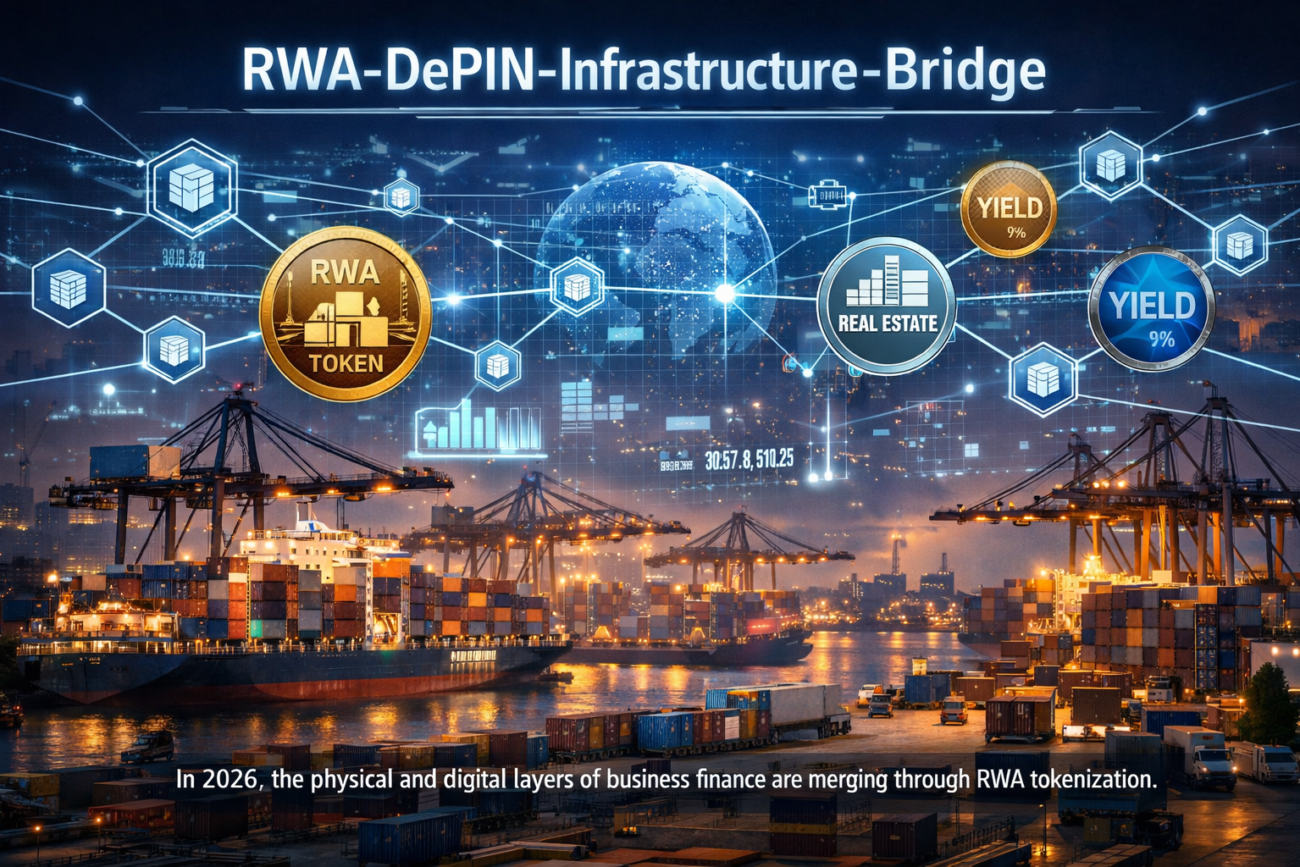
In the previous chapters of our 2026 financial guide, we explored how AI-driven credit risk assessment is speeding up approvals and how Agentic FinTech is automating daily operations. However, a new frontier is emerging that allows businesses to turn physical hardware into liquid capital: Tokenized Real-World Assets (RWA) backed by DePIN (Decentralized Physical Infrastructure Networks).
At Akcache, we believe the “Intelligence Layer” is finally meeting the “Physical Layer.” For business owners in 2026, your machinery, delivery fleets, and even your office energy sensors are no longer just expenses—they are programmable financial assets.
The Convergence of DePIN and RWA
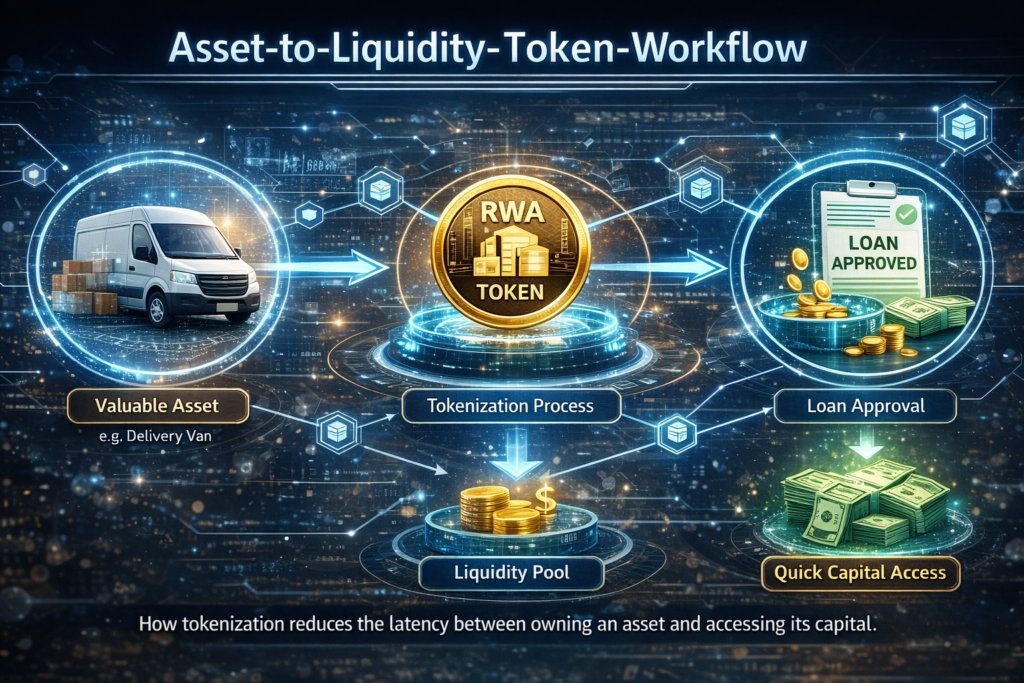
For years, business assets were “siloed.” If you owned a fleet of electric delivery vans, that value was locked until you sold the vehicles or took out a traditional loan. In 2026, DePIN protocols allow you to connect those vans to a decentralized network that rewards you for the data they generate or the utility they provide.
By pairing this with RWA Tokenization, you can “fractionalize” the ownership or the future revenue of those assets. This allows investors to provide you with immediate liquidity in exchange for a small percentage of the asset’s automated earnings.
Why This Matters for Your “Financial Cache”
The core mission of Akcache is reducing latency. Traditional asset-backed lending takes weeks of appraisals and paperwork. Tokenized RWA reduces this to seconds. When your assets are “on-chain,” their value is verified in real-time, allowing your AI Agents to manage them as part of your high-speed liquidity pool.
3 Ways Tokenization is Changing Business Finance in 2026
1. Equipment Refinancing via On-Chain Yield
Instead of a bank loan, businesses are now “staking” their physical hardware. If you operate a data center or a green energy farm, you can tokenize the output. Investors buy these tokens, providing you with the “cache” needed to scale, while they receive a portion of the automated yield generated by the equipment.
2. Real-Time Collateralization
In our deep dive on AI Credit Risk, we discussed how lenders look for 1,600+ data points. Tokenized assets provide the ultimate data point: verified, immutable ownership. Because the asset is tokenized on a blockchain, a lender’s AI can instantly verify its existence and value, leading to lower interest rates and higher loan-to-value (LTV) ratios.
3. Inventory Tokenization
Retailers and manufacturers are using RWA protocols to tokenize their “Work in Progress” (WIP). This allows a business to unlock the value of products that are still on the factory floor, providing the working capital needed to fulfill the next big order without waiting for the final sale.
The Role of Agentic AI in RWA
You don’t need to be a blockchain expert to benefit from this. As we noted in our guide to Agentic FinTech, AI agents now handle the “heavy lifting” of token management.
- Auto-Rebalancing: Your AI agent can move liquidity between your tokenized assets and your interest-bearing accounts based on real-time market needs.
- Compliance Automation: AI ensures that your tokenized offerings meet 2026 regulatory standards, automatically handling KYC (Know Your Customer) and tax reporting.
Navigating the 2026 Regulatory Landscape
One of the biggest hurdles for RWA was legal clarity. In 2026, the “smart contract” is recognized as a legal lien in most major jurisdictions. This means if you tokenize a piece of construction equipment, the blockchain entry is as legally binding as a paper title at the DMV. This legal-tech bridge is what allows Akcache readers to scale faster than the competition.
Security and the “Zero-Trust” Asset Era
While RWA offers incredible speed, it requires a secure foundation. At Akcache, we recommend that businesses only use protocols with:
- Proof of Reserve (PoR): Real-time verification that the physical asset actually exists.
- Multisig Custody: Ensuring that no single entity can “un-tokenalize” your assets without authorization.
Conclusion: Building a Liquid Future
The businesses that will thrive in 2026 are those that treat their physical world with the same speed as their digital world. By leveraging DePIN and Tokenized RWA, you ensure your business is not just “caching” data, but “caching” real, spendable value.
Whether you are seeking modern business loans or building an autonomous treasury, tokenization is the final piece of the 2026 efficiency puzzle.
