

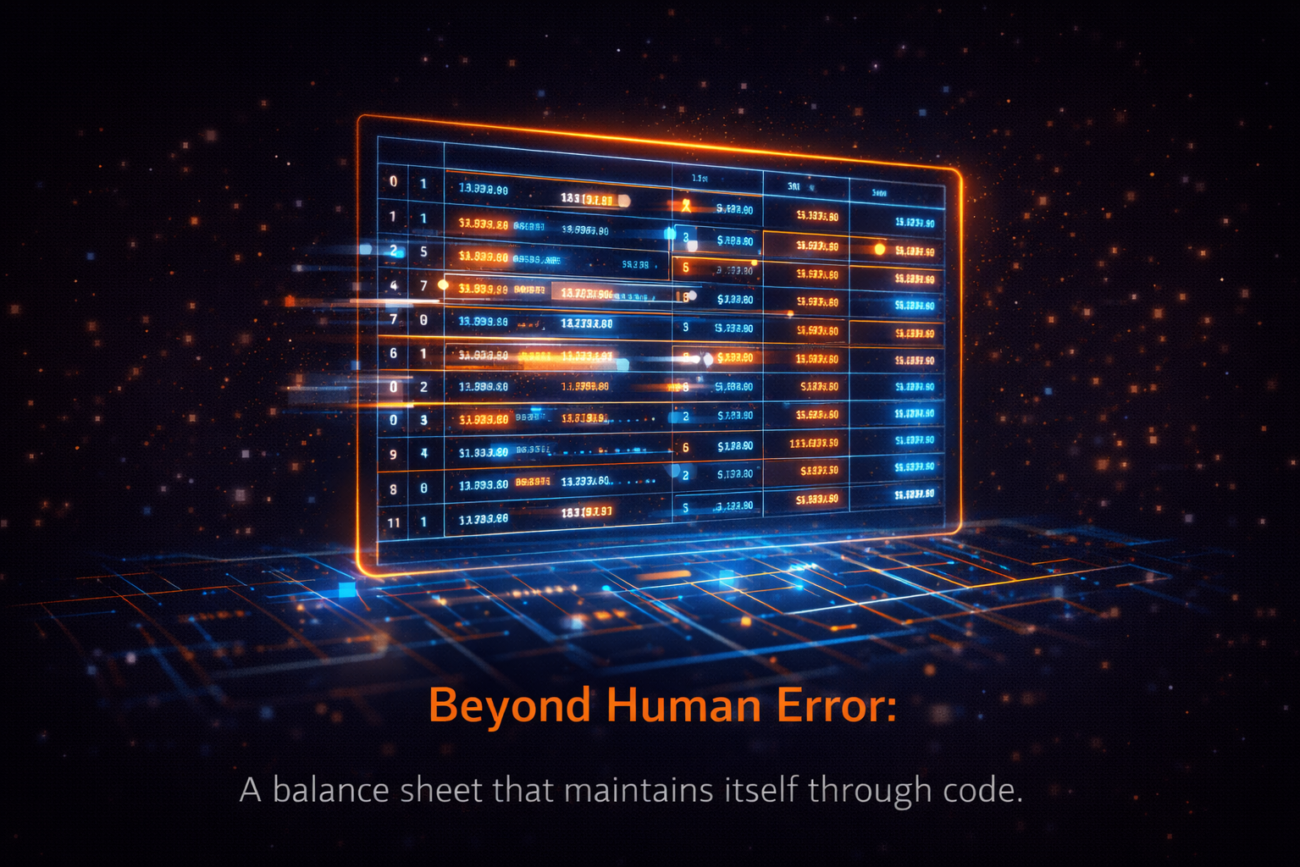
Autonomous Asset Management is the final frontier for the sovereign founder. For decades, managing a business meant “Manual Oversight”—hiring layers of management to watch machines, accountants to track money, and lawyers to verify contracts. This human-centric model is the single greatest source of friction, error, and “leakage” in modern finance. As we move further into the liquidity revolution, the need for human intervention is being replaced by the precision of code.
At Akcache, we define this shift as moving from “Managing Things” to “Governing Protocols.” It is the process of turning your physical hardware and digital capital into self-governing entities. By adopting this framework, you ensure that your enterprise operates at the speed of the network, rather than the speed of a boardroom.
The Architecture of Automation
Autonomous management relies on a continuous feedback loop between physical assets and a digital ledger. When your infrastructure is connected to a decentralized protocol, it ceases to be “dumb hardware” and becomes an intelligent agent capable of making its own financial decisions.
1. Real-Time Performance Audits
In a traditional business, you only realize an asset is underperforming when you see the monthly report. In an autonomous system, the asset audits itself every second. Using decentralized sensors, your hardware reports its efficiency directly to your treasury. This level of transparency is essential for maintaining fractionalized velocity, ensuring that every micro-unit of value is performing at its peak. If efficiency drops, the protocol triggers a correction without a single human email being sent.
2. Automated Yield Reinvestment
The “Silent Killer” of wealth is idle capital. Money sitting in a bank account is money that is losing its edge. Autonomous Asset Management ensures that every dollar of profit is instantly swept into high-velocity liquidity pools. By utilizing quantum liquidity standards, your business ensures that its capital is always positioned in the most efficient yield-bearing environment possible.
Weaponizing Automation: The Founder’s Edge
The “Autonomous Edge” is the ability to operate with a level of agility that traditional firms cannot match. While your competitors are stuck in “Restructuring” phases, your enterprise is simply “Recalculating.”
- Frictionless Scalability: Because management is handled by code, adding a new asset to your portfolio—whether a data node or a commercial property—is as simple as updating a protocol. This scalability is the heart of elastic capital architecture, allowing your business to expand and contract based on real-world demand.
- Algorithmic Trust: When your assets manage themselves, you remove the “Human Risk” from your cap table. This makes your programmable equity far more attractive to institutional partners, as they can verify the health of the business through the ledger rather than through biased internal reports.
The Privacy of the Autonomous Architect
In a world obsessed with data transparency, the sovereign founder values Controlled Exposure. You want your assets to be verifiable for the sake of credit, but you want your operational “moat” to remain private.
We achieve this through Zero-Knowledge proofs. By using privacy-preserving architecture, you can prove to a lender or a regulator that your assets are 100% solvent without revealing the specific geographic location of your hardware or the proprietary logic of your reinvestment loops. You maintain the “Trust” of the public market while keeping the “Confidentiality” of a private family office. This is the cornerstone of synthetic governance, where the rules are public, but the strategy is yours alone.
The Horizon: From Manager to Architect
Building for Autonomous Asset Management is the final step in the evolution of the independent firm. It is the transition from a person who “works in the business” to a person who “oversees the protocol.”
At Akcache, we provide the blueprints for this evolution. From the optimization of your physical infrastructure to the automation of your internal markets, every step you take should be a move toward a self-governing legacy.
Conclusion: The Architecture of the Living Machine
The old world of manual management is slow, expensive, and fragile. The new world belongs to the Autonomous Protocol. By adopting Autonomous Asset Management, you ensure that your business is not just a collection of assets, but a living, breathing financial machine that can protect and grow itself.
You are no longer just a founder. You are the architect of an autonomous future.
Build something that grows while you sleep.
