


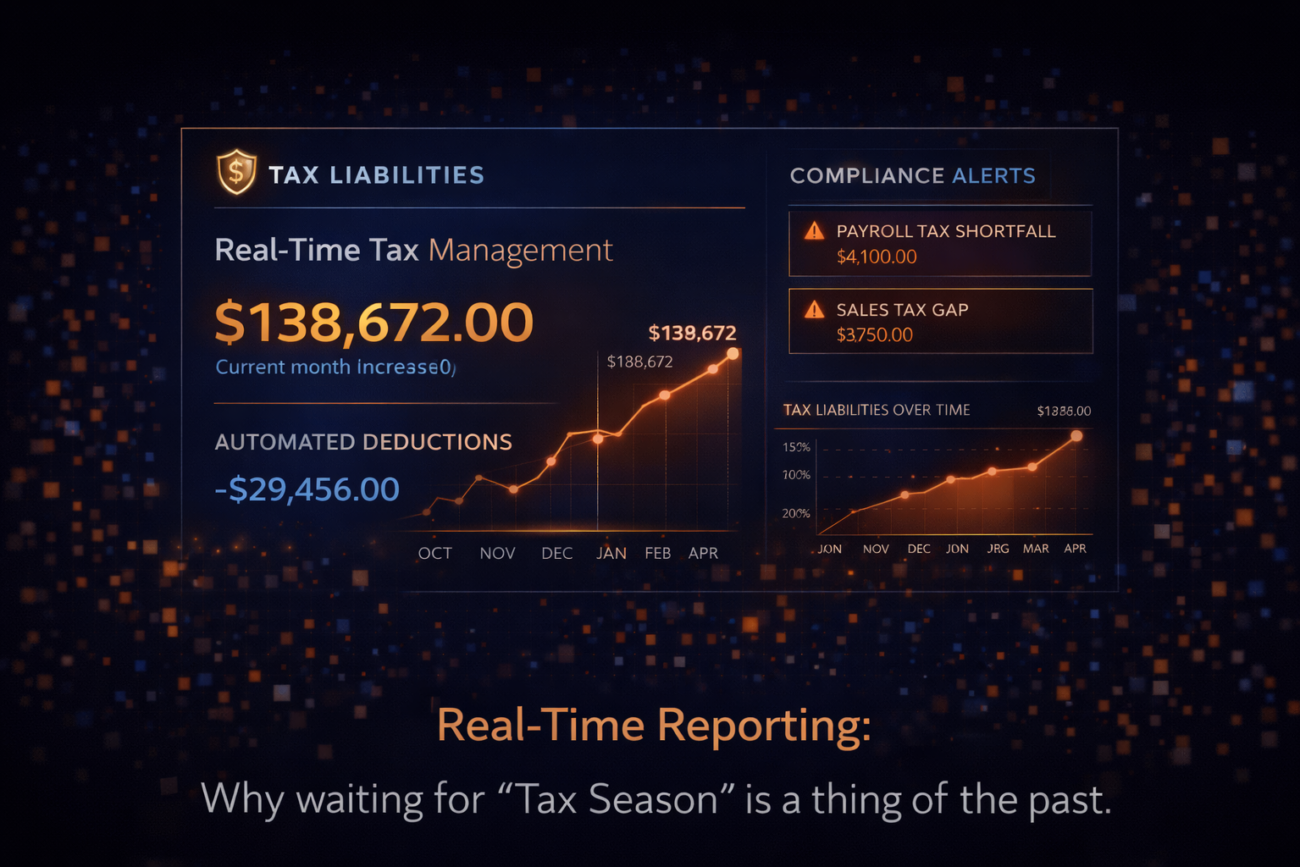
As businesses move toward tokenized corporate debt and autonomous treasury management, a new complexity arises: Velocity. When your capital moves across borders and protocols in seconds, traditional “end-of-year” tax accounting becomes impossible.
In 2026, the most profitable firms aren’t just those with the best sales; they are the ones with the best Algorithmic Tax Strategies. By embedding tax logic directly into your financial stack, you ensure that compliance is a byproduct of your operations, not a bottleneck.
The Shift from Hindsight to Foresight
Traditional accounting is a “Hindsight” profession—you look at what happened last year and try to report it accurately. In a world of real-time revenue recovery, this approach leads to massive “Tax Drag,” where you overpay because you didn’t optimize your positions in the moment.
Algorithmic tax systems flip this model. They provide Forward-Looking Compliance. The system analyzes your business loan structures and projected yields to suggest the most tax-efficient way to move capital before the transaction happens.
The Mechanics of Real-Time Tax Optimization
Automating your tax strategy involves more than just keeping digital receipts. It requires a system that understands the legal nuances of Real-World Assets (RWA) and decentralized finance.
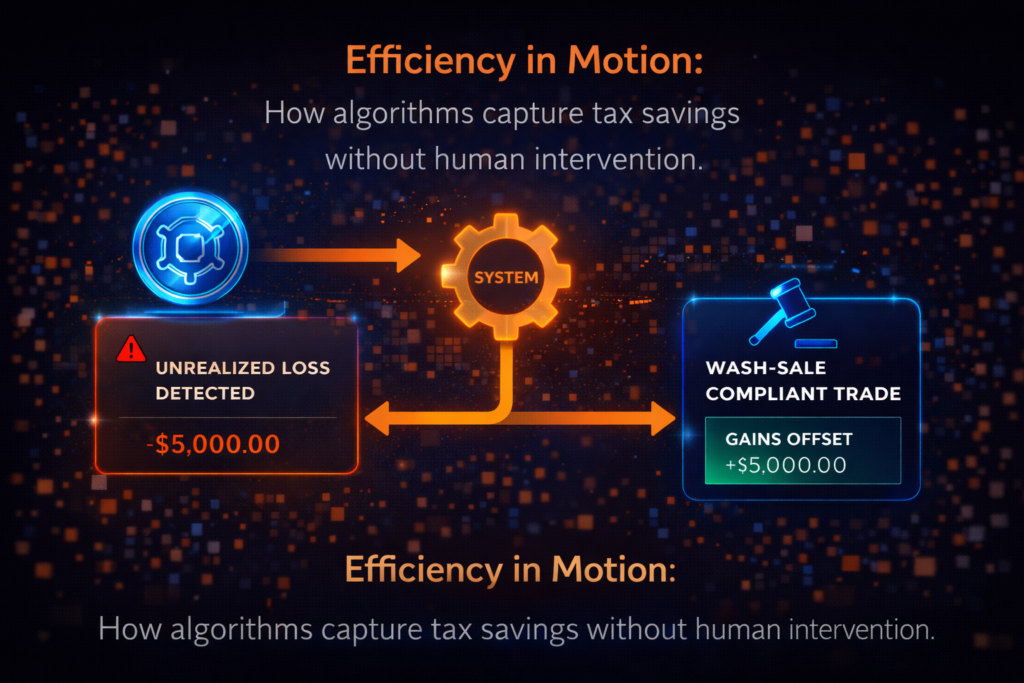
1. Automated Tax-Loss Harvesting
If your company holds various tokenized assets—such as fractionalized real estate or DePIN hardware tokens—their values will fluctuate. An algorithmic strategy monitors these positions 24/7. When an asset drops in value, the system can automatically sell and repurchase a similar asset to “lock in” a capital loss, which is then used to offset the high gains from your liquidity aggregation.
2. Cross-Border Dividend Logic
For firms using supply chain finance involving international partners, withholding taxes can be a nightmare. Algorithms can automatically apply the correct tax treaty logic based on the location of the Smart Legal Contract, ensuring that you only pay what is legally required and nothing more.
Protecting the “Akcache” from Excessive Taxation
The goal of the Akcache ecosystem is to maximize the velocity of your money. Tax, if unmanaged, acts like friction on that velocity.
Leveraging Debt for Tax Efficiency
By utilizing tokenized private credit, businesses can often structure capital injections as “Debt” rather than “Equity.” In many jurisdictions, interest payments on corporate debt are tax-deductible. An algorithmic system ensures that your debt refinancing is always balanced to maximize these deductions while staying within safe harbor regulations.
Depreciation of Digital and Physical Assets
Businesses operating DePIN infrastructure own physical hardware that generates digital revenue. Algorithmic strategies can automate the “Capital Allowance” or depreciation schedules for this hardware. The system matches the wear-and-tear of your physical nodes with your tax filings, providing a continuous shield against your taxable income.
Privacy and Audit-Ready Governance
A common fear with automated tax systems is the risk of an audit. However, in 2026, “Audit-Ready” is the default state.
Through the use of Zero-Knowledge Proofs (ZKP), as discussed in our embedded finance guide, you can provide tax authorities with “Proofs of Compliance” without handing over your entire database. You can prove that you paid the correct amount of tax on your M&A exit while keeping the specific details of your buyer and your proprietary trade secrets completely confidential.
The Competitive Edge of “Tax-Aware” Operations
In a tight market, the difference between a 20% margin and a 25% margin is often found in the tax code.
- Scenario A: A traditional firm pays its taxes annually, losing out on 12 months of potential yield on that “Tax-Owed” capital.
- Scenario B: An Akcache-powered firm uses an algorithmic strategy to keep its “Tax-Owed” capital in a low-risk yield pool until the very moment the payment is due.
By the time the tax bill is paid, the automated firm has generated an extra 3–5% in “found money” simply by managing the timing and the harvesting of its liabilities.
Conclusion: Compliance as a Competitive Moat
Tax should not be a surprise that happens once a year. It should be a managed variable in your daily business operations. By adopting an algorithmic tax strategy, you remove the human error and the “Capital Latency” that plagues traditional firms.
As you continue to build your business through tokenization and AI-driven efficiency, remember that the final measure of success is not what you earn, but what you keep.
